Monday, 30 January 2012

Pace Bowling Practice in Argentina


In the absence of a bowling machine in the north of Buenos Aires I try to recreate the intensity of facing fast bowling by throwing the ball as hard as I can from 16 yards. However, with the amount of throwing I was doing my arm was close to falling off. I was also developing a back of two half’s. One half, the throwing side, resembled the muscles of a Shark and the other side, the non-throwing side, had the definition of a Walrus. Combine this with a hunchback from years of keeping wicket my new nickname is ‘Quasi’

During a trip to the UK last summer I came across a gadget sent from the cricket coaching gods. It is a plastic stick with a handle at one end and a cup that holds a ball at the other end, it is also used by dog owners for a game of fetch.  I can now achieve maximum speed with minimum effort.
Britsh Argentine Ben Precious gets prepared to face the music................
Due to the extra pace the gadget generates holes have appeared in the net. This has caused a new problem altogether! Stray balls are now flying through the net into car park.  The first few times the porter passed the balls back but when a brand new ball narrowly missed a Mercedes Benz he reacted more aggressively. He said, waving lots of arms and mannerisms that you may see after a car crash, ‘you can only have the ball back when the nets are mended!!’ I have obviously mentioned the situation to the ground staff and it has been added to the list of things to be fixed.

The show must go on, batters need to learn to play pace better in South America! But, after the tenth decent ball went through the net I needed a plan to keep costs down. The string I tied had not held the net and the rugby players soon took back their tackling bags which I used to protect the holes.

Thinking outside the box I came across some baseballs in a shop in the US. Twelve balls for $20USD, bargain I thought. And I took as many as I could back to Argentina. We only use baseballs for throw downs now and we still lose the same amount of balls (because the nets have yet to be fixed) but it doesn’t cost as much. But what if one of these balls goes though the net?? Baseballs only weigh 5ozs so I have achieved damage limitation! 

Friday, 6 January 2012

Three day cricket in Argentina???!!!!

Yes you did read the title correctly; three day cricket is alive and kicking in Argentina and has been for over a hundred years.  The first annual three day North V South fixture was played in 1891 and has been played every year, apart from the war years. I have been reliably told it is one of the oldest fixtures in the world.
Forget T20 cricket, the three-day North South annual superclasico is the biggest cricket fixture in the continent. The North-South line has gradually moved further down the country over the years to maintain a competitive fixture. This is because cricket clubs have disappeared in Rosario and Cordoba in the north of the country due to the British leaving Argentina after The Second World War.
Belgrano Pavilion 
In such a small cricketing community, where every player will have already played together at national level, you would think that it would be a calm affair. Think again. The North South is the highlight of the cricketing calendar. Players are desperate to get selected and to represent their side at all costs; friendships are put on hold for at least a week before the game.  One player came back from his new residence in Columbia especially for the game. It is that important.
Nino (north) bowled by Ryan (south)

Practice sessions and team building asados start ten days before the game to get each team prepared. Both teams have a selection committee and manager, so politics, eligibility issues and favouritism are avoided and the best eleven can be selected fairly. I also take a step back and remain neutral. This allows me to watch from a safe distance while the Latino tempers run riot on the pitch and competitive juices explode.
Winning South Team

The South has dominated this fixture for the last decade. There were no changes in fortunes this year in the 112th fixture, when the South won a hard fought contest which went down to the last ten overs. The 2011 fixture was played at Belgrano Athletic Club where players old and new turned out to watch the drama unfold. Daily scores were published in the Buenos Aires Herald and last year there was even a live score board on the internet to keep followers updated immediately if they could not make it to the match.
Who said three day cricket was dead???? 

Saturday, 18 June 2011

Americas Cricket Academy, St Kitts 2011

The first ever ICC Americas Academy took place earlier this year at the Warner Park Stadium, St Kitts. Argentina's cricketing neighbours had to fly for anything between 3 and 13 hours to get to the camp. The mix of cultures and languages from North, South, Central America and the Caribbean created some pretty interesting dressing room banter, as well as plenty of exciting cricket.


ICC Americas Academy squad

The best fifteen players aged 18 to 24, from the seven Americas High Performance countries, Canada, USA, Bermuda, Suriname, Argentina, Bahamas, Cayman Islands and two from St Kitts and Nevis were invited to the Academy. The Academy was run by Andy Pick ,the Americas High Performance Manager, with three coaches working in specialist areas - John Abrahams (batting) Chris Brown (spin bowling) and myself (wicket keeping and fielding).

Each day the group started and ended with a sports psychology session from David Scott who used to work for West Indies Cricket and now works with National Hockey Team, the Montreal Canadians. These sessions focussed the mind using techniques which are already employed all over the world by professional players in test nations.

Argentines Alejo Tissera and Agustin Husain
 start the day with a visualising sport psychology session
No one really knew what would happen when players from Associate and Affiliate nations were put in a professional cricket environment for ten intense 12 hour days that stretched them to the limit, but they all made it through to the end with flying colours.
Drills Session at Warner Park
It was remarkable to see players absorb so much information so easily and develop so quickly. They saw it as a chance of a lifetime and not a single player grumbled at the searing heat which they were asked to train in or at the demanding schedule. Most of these players have never seen a test ground let alone played on one. 
Middle practice at Warner Park
The players finished the Academy with a one day match against a St Kitts and Nevis XI. In a closely fought contest the Americas fell agonisingly short by nine runs. There was very little difference in talent between the teams, however the difference in cricket awareness and experience was there for all to see.  The only way to bridge this gap is by playing lots of high-quality matches, and that is very hard to achieve in Associate and Affiliate nations.


Batting Coach John Abraham passes on his knowledge

I genuinely wonder how good these guys could be if they were brought up in test nations, where cricket is an everyday occurrence and not a once in-a-lifetime experience.

Tuesday, 24 May 2011

Boys Against Men - Argentina Under 19s Tour


Argentina's road to the Under 19 World Cup started and ended at the Americas Division 1 competition in Florida. But with an average age of 15 years and four months, our aim was to enjoy, learn, compete - and get back in one piece.

Tincho Perelta - getting his hair done
The team certainly enjoyed themselves. Debutants received initiation haircuts. These comprised the 'usual' Mohicans and skinheads. Sporting new hairstyles, the team may have been the smallest in the tournament but they were also the scariest looking.
Nacho Pizzo going for a grade one

The players also learned a lot. And on some pretty basic levels. For instance, when one bowler appealed to the umpire, one of the 14-year-olds screamed 'Sabadat' instead of the tried-and-tested 'Howzat',
such was his lack of cricketing knowledge.

Mohican - 13 year old Feli Nogues
Another player learned the fundamental difference between Astroturf and grass. After each ball the player in question would prod the surface with his bat. When quizzed on why he was doing this he replied that he had seen England's Jonathan Trott doing the same. It was explained to him that 'gardening' was not necessary when tending a surface that wasn't living.......

The team did compete. We beat the Bahamas and came close to doing the same against the Cayman Islands. However, against teams such as the USA, Canada and Bermuda, the gap was just too big.

Argentina take another wicket on their way
 to victory against the Bahamas

The games were played at three different venues, one of which was the USA National Cricket Stadium with a capacity of 12,000. It is an amazing experience to play in such a ground, but it becomes even bigger when players from Argentina have never as much seen a cricket ground before.

The 12,000 capacity national
 cricket stadium in Florida
And we did manage to get back in on piece. Just. The biggest scare came on the last day after a shopping trip to Saw Grass, the biggest shopping mall in the world.One player became detached from the main party and was finally found wandering around aimlessly just three hours before our plane left.

The most pleasing thing from a development point a view is that Lautaro Musiani and Agustin Husain, who played in the U19s team, have now been selected for the full national squad to compete in The ICC Americas T20 tournament later this year.

Thursday, 5 May 2011

A More Testing Time

Cricket commitments during exam time generally mean one or the other will suffer. I appreciate this as well as anyone, having sneaked out of study periods during my A Levels to face bowling machines.


I am organising training schedules in preparation for the Americas U19s division one competition, taking place in Florida. As a reader of this blog, it will come as no surprise that things are again different in Argentina.


Celebrations start after Argentina U19s win
 the Americas Division 2 in 2010


I was delighted to learn that school had finished well in advance of the competition. I revived a few enthusiastic emails from players stating that they were available to train 'any time'. Great, I thought. time enough to up-skill for the upcoming tournament, which is, in effect, the first round of qualifying for the Under 19s World Cup. I replied, but silence fell across the internet, until a week later when the very same players contacted me to say they were now unable to train because they still had exams to complete. It seems the school calender only finishes when you pass your exams; or rather if you pass your exams.


Bugger. I thought. But not to worry. Being the caring, holistic coach I am, I expressed the importance of school work - at least until the exams are over.


Three weeks passed. Another phone call from the players in question. Exams are over and they are finally ready to fully commit all their energy, effort and concentration to their cricket. Fantastic, I think. Less time than I would have liked, but time enough to work on improving the basics and have some fun.


One week later the phone rings again. The players in question will not only not be able to train in advance of the tour, they will now not be able to come on the trip at all. It turns out the players had not quite made the required mark for the second time and must retake the exams but this time the re-retakes coincide with the tour dates.


As bad as it is for the team, it's now even more dire for the players in question. This is the last chance saloon. To fail a third time would mean repeating the year. And the irony of it all? These players are the oldest, most experienced and best in the squad. This means that the Argentina Under 19s squad are heading stateside with an average age of 15.4 which must be the youngest under age party in cricket history.


Bring it on.........  

Tuesday, 26 April 2011

Football Stories - El Clasico De Avellenda - Six year send off

History

El Clasico de Avellanda is the second biggest Derby in Argentine domestic football behind River Plate and Boca Juniors in terms of support and recognition. But what it lacks in hype it undoubtedly makes up for with the feistiest rivalry in Argentine football.

Racing fans

The rivalry started because their grounds are only 300 meters apart in the once industrial heartland of Buenos Aires. The biannual fixture is surrounded in a history of violence, the most serious being in 2006 when the game was abandoned after fighting between the fans escalated out of control. Independiente were winning 2-0 when rioting broke out in the Racing stands in an attempt to get the game abandoned, resulting in a necessary replay. When Racing fans began to attack the police the game was eventually stopped. In the aftermath, drastic action was taken. All away fans were banned from the top four divisions of Argentine football and Racing fans were banned from their home ground. The win was eventually awarded to Independiente.

The violence is not limited to the fans, the players have been known to get involved. In the 1961 Clasico the referee was forced to suspend the game for 6 minutes due to fighting amongst the players. The referee eventually sent off 4 players from each team.

Racing V Independiente April 2011- Clausura


The atmosphere at Racing is like no other ground I have been to before due to the fans, but this day was unlike any I have ever experienced. The trip to a football ground in the UK is usually met with a few fans singing to each other and scarfs hanging outside the windows of cars. Racing fans took it a step further by holding blue and white flares while hanging outside buses jammed full of supporters.

Racing enter the pitch


We managed to get into the ground 25 minutes before kick-off. As we walked to our seats we passed twenty black bin bags in our section which I assumed were full of rubbish. How wrong could I be? The bags were full of paper to be thrown on to the pitch before kick-off. The endless amount of shredded paper and around thirty blue and white flares made for the most impressive entrance to a football game I have ever seen. There was so much smoke from the flares that I could not see the pitch from the second tier. Once Racing made their entrance a banner spanning half the circumference off the pitch was hung from the second tier. 
All this is to intimidate the Independiente fans and team which are left to watch this specular for 5 minutes before Racing have even stepped onto the pitch. The atmosphere had more in common with a rave than a football match.

This entrance is a tradition at Racing and in the past Racing have fans have thrown what must be a record of 15,000 toilet roles before the game.

15,000 toilet roles


The Independiente fans are known as the Amargos (translated as bitter in Argentina) to Racing because it is an expression given to fans that dont sing. Independiente are known as a crowd that would not follow their team as soon as they lost a couple of games - the exact opposite to Racing fans. 

http://racingclubexperience.blogspot.com/

In the past Racing have thrown lemons at Independiente showing their disgust, but this time they threw sugar sachets to cure there bitterness and their coach took one and started to eat it!

The spectacular entrance made up for the poor quality of football from two very nervous teams. Racing won 2-0 but if it had not been for poor finishing it would have been 5-0. However, no one cared because it was the first time Racing had won the Avellaneda derby in 11 attempts in a 6 year period. 

Just for good measure to keep the tradition of violence going in the fixture a Racing player clattered into his opposing number in the 90th minute. The raised two footed challenge was more reminiscent of a street fighter move on play station than a football tackle. The player was rightly given a straight red card.

Once the referee blew the final whistle the party began. Racing fans giving the Independiente fans a six year send-off. Racing fans kept singing in their home ground for the customary 30 minute period, before the police waited to let them leave the ground due to fears of crowd violence.

Friday, 8 April 2011

The Endangered Species of World Cup Giant Killings

The 2011 cricket world cup may have seen giant killings for the last time as the fourteen team world cup tournament is reduced to just ten teams in 2015. The decision; a result of ten test playing nations votes and ninety five other cricket nations not invited to the party.

The rational is wrapped up in the pretence to cut down the total number of games, but the figures don’t add up.  The 2007 world cup saw fifty one games played by sixteen teams, lasting forty six days, reminiscent of Groundhog Day. The 2011 world cup saw fourteen teams and forty nine games. Astonishingly, the proposed ten team 2015 world cup comprises of forty eight games, totalling forty five group games to decide who will play in the semi-finals.

The 2007 world cup became a commercial disaster when TV ratings crashed due to Pakistan and India failing to qualify for the second round, falling to Ireland and ex associate member Bangladesh. These upsets were the catalyst to disregard non-test playing nations in 2015. To guarantee broadcasting and advertising profits in 2015 a minimum of nine games with major cricketing nations are scheduled but carry the potential for viewer burnout.

Giant Killers - Ireland celebrating after putting out Pakistan in the 2007 World Cup.
For those who say there is no point having the minnows in the world cup...remember this; how would this year’s world cup have been if Ireland had not beaten England? It would have been a procession of meaningless games up to the last eight. But instead we had nail biting games in group A with England, India, Bangladesh and West Indies fighting to qualify. I can’t even remember what happened in group B it was so boring and not one game in the knock-out stages could have been described as an epic, even though the cricket was of the highest standard.  


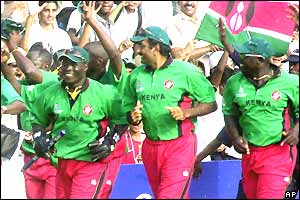
Some may say it was a fluke that an associate caused an upset, but it was not. Bangladesh who secured a series win over New Zealand last year, lost to Ireland and the Netherlands last summer. England also only scraped home by three runs against Ireland in 2009. World cups have developed associate nations into test playing nations and associates have shown that they can beat the best. As well as Ireland’s heroics in the 2007 World Cup, Kenya crushed the West Indies in 1996 and in 2003 they beat Sri Lanka to reach the Semi Final.

Giant Killers - A game I witnessed at my old ground, Wantage Road - Northampton.
 Bangladesh beating Pakistan in the 1999 world cup.
At the time they were still an Associate member.

The results of Bangladesh beating Pakistan in the 1999 World Cup and Zimbabwe captained by Duncan Fletcher beating Australia in 1983, have not only brought romance to the world cup but have also been a spring board to achieving test status. Now Ireland are knocking on the door with a professional structure in place producing test players of their own but are sadly not invited in 2015. A whole generation of cricketers will be lost to Ireland, because they will quite rightly want to play the best cricket available to them - meaning qualifying for England.

Giant Killers - Former team mate Kevin Curran celebrating with Duncan Fletcher
after Zimbabwe, an associate nation at the time, beat Australia in the 1983 world Cup


Imagine if the number of teams in 2011 had not been cut from sixteen to fourteen, Afghanistan would have achieved successive promotions from world cricket league division 5 to the world cup. No matter how well associate sides do in the eight world cricket leagues they can’t reach the top of the pyramid any more. Associate teams who have ambitions to become test nations, of which world cup winners Sri Lanka used to be until 1982, have no hope of getting better if they are not getting exposed against better players.

Giant killers - Kenya doing a lap of honour after beating Sri Lanka in the 2003 World Cup. 

The blow to the ninety five non-test nations has been eased slightly with the T20 world cup increasing to sixteen teams in 2012, however the message is misleading. Top associate nations can only enhance their chances of becoming a test nation by having good 50 over displays, this has now gone. The objective of an associate nation is to develop and hopefully develop into a test playing nation, but the jump from T20 cricket to test cricket is impossible. Therefore, the only way to get to the top of the pyramid for associate nations is to produce good T20 players but this does not develop cricketers.

ICC officials said before the world cup that no final decision had been made on how the teams would be selected for the 2015 world cup and there may be a qualifying tournament. Now, hidden in the sub-continent euphoria of India winning the most scripted world cup in history we have the final decision of a ten team world cup with only test nations invited. But, why is test cricket being used to judge one day cricket? The rankings are different and the player personnel are different. The most glaringly obvious difference is that Ireland are ranked in the top ten in ODIs and Zimbabwe are 11th.  This life line to non-test playing nations does not sound convincing.

We have lost the magic of the cup.

Wednesday, 16 March 2011

Cricket Kit in Argentina

Buying kit in a cricket-playing nation is relatively straightforward. It means going to a sports shop. Buying it online. And waiting for it to be delivered. Simple.

Buying kit in Argentina is not so simple. You will not find a cricket shop anywhere in South America. Plus, any new product that makes it into the country which has a value of over US$300 is liable to 50% tax. Cricket balls are never sent through the post. The last time 12 brand-new Kookaburras arrived in Buenos Aires, customs officials had no idea what they were so cut each ball in half to check for drugs or explosives!

Two Kookaburras which have seen better days

But forget the balls. During my time here I have come across the best bat ever made, in terms of price, durability and performance. The brand is 'Gymkhana' and apparently it is made in Yorkshire. It must be 25 years old, and is used by every youth in every net session at Belgrano Athletic Club. It bows the wrong way and with the twine around the handle long since gone, the rubber grip is all there is. And it still goes like a gun.

Some gems from the Belgrano Athletic kit bag including the legendary Gymkhana bat

So what happens if your bat breaks with no bat maker to mend it? And when gaffer, sellotape and fiberglass no longer holds? Argentine cricketers don't give up on their lumber. They find a 'third way'.

I first noticed this method when lifting a random bat to demonstrate a forward-defensive shot. The bat picked up unlike anything i'd come across. What could this be, I thought? New bat technology? A different perimeter-weighting perhaps? Closer inspection showed that there were screws in each edge holing a should-be fatal crack together. I'm not sure this would pass the MCC's laws on bat regulations, but I was cheerfully informed that it can add months to the life expectancy of any bat. In any condition. From any era.

Sunday, 27 February 2011

Cricket in Whites? - The trials and tribulations of watching the Ashes in Argentina

Every sporting fan will have experienced being abroad when a major sporting event is on and being desperate to tune in. It is no longer the problem it was. All that is needed is a bit of organisation. Easy, or so you'd think.

However, cricket is about as well known in Argentina as I am. It is not on air at all. But this minor inconvenience aside, the Argentine cricket community were determined to watch the greatest cricket series on the planet. 

The new age of technology now means live feeds on the internet, so cricket is available to the masses. As a rule, Argentine cricket fans watch in the comfort of their own home on a lap top or in a group accompanied by an Asado (that’s a complicated BBQ to Brits).

A perfect evening in Argentina - Carne y Cricket

I chose the First Test Down Under to show some of the Argentine cricketers that I could mix it with the best in the kitchen stakes, by cooking 5Kgs of meat to perfection, while they watched the live stream on the computer.

Worryingly as I was cooking, I heard some rather concerning comments about the cricket from my cricketing charges, such as “Why are they playing in White?”, “Ricky who?” and “How can a cricket game last five days?" Our Ashes Asado ended prematurely at the behest of annoyed neighbours just after tea at about 2.30am. Which I thought was pretty early for a school night here.......

To further their education we enticed an American sports bar to link a computer up to a big screen with the promise of bringing 25 punters to the bar. The feed was great and so was the atmosphere. However, I was again perplexed with some of the comments I was hearing from some of the Yanks who frequent the bar.  The conversation went something like this. “Gee Brad, why does the pitcher keep throwing ground balls?” to which the reply came “I know Hiram, and why does the guy behind the hitter have two gloves on?” Bloody Septics, eh.......I think next time I will give the bar a miss. I'm sticking to the laptop, grill and vexed neighbours approach.    

Sunday, 20 February 2011

Non Test Playing Nations World Cup Squad


This is part of an article I wrote for 'All Out Cricket' magazine last year which named my top 10 cricketers outside of Test cricket nations. I have now taken this a step further and below is my 2011 non Test playing nation world cup squad. Unfortunately this maybe the last time they get to compete at the highest level, due to the 2015 world cup only consisting of Test playing nations.  


1 - Trent Johnson
Ireland, New South Wales, Mosman

Age: 36
Role: Allrounder
This man has leadership qualities in abundance. The Aussie moved over to Ireland after a career playing for New South Wales. In the 2007 world cup he captained Ireland causing the biggest upset in world cup history when the 'Blarney Army' saw off Pakistan.


2 - Gerrie Snyman
Namibia
Age: 29
Role: Allrounder
After taking the prize wickets of Andrew Flintoff and Paul Collingwood in the 2003 world cup, this hard hitting all rounder has gone from strength to strength. Although he has generated interest from county sides, it would mean giving up his national duties for Namibia, something he is not prepared to do.


3 - Boyd Rankin
Ireland, Derbyshire, Warwickshire

Age: 26
Role: Right Arm Fast Bowler
At 6'8", Rankin is probably the tallest player in Associate/Affiliate cricket. He swapped the life of a cattle and sheep farmer for a professional cricket career and is now contracted with Warwickshire. He finished as Ireland's leading wicket taker in the 2007 world cup with 12 wickets.


4 - Ashish Bagai
Canada
Age: 28
Role: Wicket Keeper/Batsman
This 'City Slicker' has been combining a high flying banking career at UBS with international cricketing duties for over five years now. After he averaged 86 in the 2007 World Cricket League in Nairobi he was convinced he should take cricket more seriously and has now accepted a professional contract with the Canadian Cricket Board.
   

5 - Nial O’Brien
Ireland, Northamptonshire, Kent
Age: 28
Role: Wicketkeeper/Batsman
Averaging 35 in first class cricket, it was the gutsy Dubliner's match winning 72 that famously beat Pakistan in the 2007 world cup. He is a constant irritation to opposition batters with his endless on field chattering. His transition to the comm box should prove seamless.


6 - David Hemp
Bermuda, Free State, Glamorgan, Warwickshire
Age: 39
Role: Batsman
Born in Bermuda, bred in the UK. Hemp has amassed an amazing 15,520 first class runs in a highly successful career. As captain of Bermuda this elegant left hander always looks in control. He combines his international duties with his full time job in the UK as Director of Cricket at Solihull School.


7 - Ryan Ten Doeschate
Netherlands, Essex, Western Province
Age: 30
Role: Allrounder
Possessing an ODI average of 68 and a first class average of 49. This South African-raised Dutchman regularly hits balls out of the ground into the river Chelmer when on duty for Essex. He has the enviable reputation of being the most entertaining cricketer playing the game outside of Test cricket.


8 - Lucas Paterlini
Argentina, St Albans
Age: 28
Role: Allrounder
More 'wild child' than 'wild card', Paterlini is South Americas answer to Andrew Flintoff. Where Fred does pedalo, Lucas does Tango. The fiery allrounder is always a menace to top-order, finishing second in the bowling averages at the ICC Americas Division One competition in 2010.


9 - Mohammad Nabi
Afghanistan, Marylebone Cricket Club, Pakistan Customs
Age: 25
Role: Right-hand batsman/Offspinner
Born in a refugee camp in Pakistan, Nabi developed his cricket skills with the MCC YCs in 2006. This experience stood him in excellent stead, as he is now a successful international player with an ODI average of 35.


10 - Kyle Coetzer
Scotland, Durham, Scotland Under-19s, Western Province
Age: 26
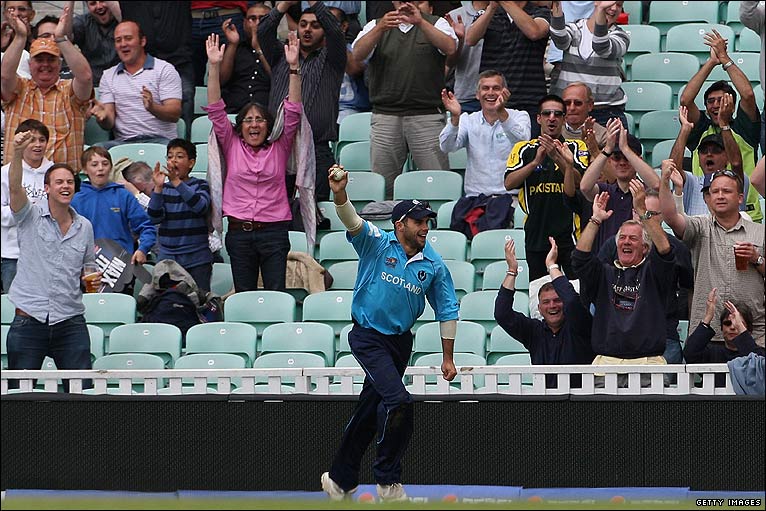
Role: Right-hand batsman
The Scottish top-order batsman has played a key part in Durham’s success in the last three seasons. His quality was highlighted at the top level when he scored 51 against England last summer. He was introduced to the game by Grant Dugmore, the CEO of Cricket Argentina.


11 - Kenneth Kamyuka
Uganda, JACC, Wanderers, Destroyers, Tornado B, Nile
Age: 28
Role: Allrounder
Known as Double Zero due to his 00 squad number he shoots to thrill. The ICC Associate rumour on the street is he is now living in Canada and will be available to play for the ODI nation in 2012.


12 - Sushil Nadkarni
USA, India Under 19s, Maharashtra
Age: 33
Role: Left hand batsman
After starting his cricket career for state side Maharashtra in India he immigrated to the States to become an engineer. He has been in the international wilderness until last year he came to prominence for the USA in there vital Division Five win against Nepal where 12,000 people invaded the pitch.


13 - Thomas Odoyo
Kenya, Africa XI, Nairobi Gymkhana, Southern Rocks
Age: 32
Role: Allrounder
Making his debut at the tender age of seventeen in the 1996 world cup, Thomas has played a staggering 126 ODIs. He was the first ICC Associate player to complete the 2000 run and 100 wicket double at ODI level and also once held the ODI record seventh wicket partnership of 119.


14 - Rizwan Cheema
Canada, Canada A, Ontario
Age: 31
Role: Right hand batsman
Rizwan made headlines when he scored 89 off 61 balls against the West Indies in 2008. He moved to Canada in the early 2000s after being born and raised in Pakistan. In 2010 he almost made it to the big time when he made the short list for the IPL contract auction.


15 - Nawroz Mangal 
Afghanistan
Age: 25
Role: Right Hand Batsman/Offspinner
Since taking over as captain in 2007 he has led Afghanistan to become the first Affiliate cricket nation to gain ODI status. He spent most of his early years in refugee camps after fleeing Afghanistan to Pakistan after the Russian invasion. He has an ODI batting average of 39 and bowling average of 26.

Tuesday, 1 February 2011

No Cambio

In every country I have been to everyone wants to get rid of their change. People don’t want coins rattling around in their pockets. It is given to their kids to put in the piggy bank or if you are flash you may say “keep the change.” There are even machines where you can convert your change into hard cash at Tesco’s or Sainsbury’s. 


The situation is totally the opposite in Buenos Aires. If you don’t go out of the house with a decent amount of coins and low denominated notes you could be in for a rough day.


Buenos Aries Colectivos 

Let’s start with the buses. Buenos Aires has the most aggressive bus drivers in the world. These guys have been put in charge of a six ton weapon of mass destruction and they know it. Going around one way cobbled streets taking each gear change to maximum revs is the norm and they use the horn given the slightest opportunity. Don’t even bother joining the queue if you don’t have small change. The driver will in the best case scenario do a lot of waving with his hands and role his eyes while everyone in the queue says “Que pasa?” Or at worst he’ll throw you off. Most of the buses don’t have change for notes at all.


Where the problem starts -
the coin till on the Buses
Taxi drivers come a close second in the aggressive stakes, but it can be even more awkward because you have to pay at the end of the journey.  These guys are not armed with the weight of a bus but have the speed and nimbleness to show they mean business. Blindly ignoring road lanes, they do as they please. When you reach your destination you’d better have something close to the right amount or you will be sent to the nearest shop to get some change. I experienced this madness in my first week of being in Buenos Aires. Even buying groceries can be an issue. Usually, you’ll get your change eventually but don’t be surprised if it comes in the form of an extra banana or some sweets which is no use to me or a taxi driver.

The reason for the shortage is the bus companies have kept all the change and then sell it on for a premium of 8%. You can walk down some streets in Buenos Aires and hear people saying "Cambio Cambio" (change change) selling change on the black market. A deal is done by exchanging 50 pesos in notes and receive 45 pesos back in coins from the change hawker.

An unhappy shop keeper with a sign saying
buy cigarettes with with change - there are no coins

This in turn has created a nation of coin hoarders. People are simply afraid they will run out of change and will not be able to go about their normal lives. You will find a plate or a jar full of coins in every home in Argentina which is compounding the problem.

The government keep printing more coins and say there are enough, but nobody trusts anything the government says, so the hoarding continues. There is now a shortage of two peso notes which makes the problem worse.
Argentine Monedas (coins)

All this hoarding creates a web of lies and deceit, which I have to admit I have become a part of. I took the attitude that everyone was doing it and so would I! I first stepped into this web one day in a shop called Disco, Argentina’s equivalent to Waitrose. I bought some shopping worth around 25 pesos (about £4). I had 130 Pesos in my wallet so I nervously handed over a 100 peso note
so I would have some change for the rest of the day. 

When the cashier asked if I had any change I lied straight through my teeth and said no but I was sorry. I was surprised how easy it was to go over the edge to the dark side, but I was even more astonished when she told me that she didn’t have any change either. Well you can’t kid a kidder I thought and quizzed her. I said “so everyone who came in here today has paid with the exact change?” “Yes” she casually replied. She fell straight into my neatly laid trap.  I replied “well as it is 8PM in the evening you should have a lot of change then." At this point she knew the game was up and I had won cambio face off. She immediately called over her assistant to bring some fresh coins and notes to the till.